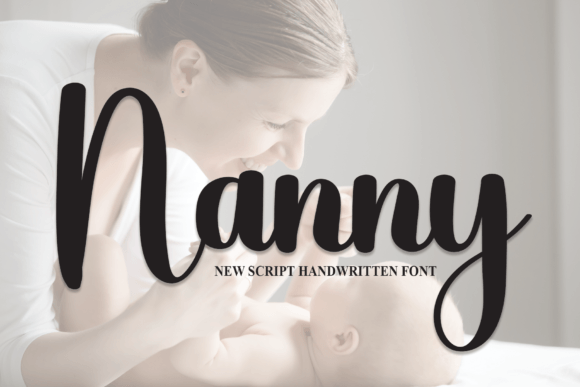
Nanny: A Cool and Casual Handwritten Font for Real Branding
It started with a blank brand board — the kind that feels equal parts exciting and intimidating. My client? A small-batch ceramic studio run by a maker who throws every mug by hand, glazes each piece with quiet intention, and sells directly through Instagram and local craft fairs. They needed a visual identity that felt warm, human, and quietly confident — not slick, not sterile, not overly polished. That’s when I opened my font library and typed “Nanny” into the search bar.
Nanny for Greeting Cards and Handmade Brand Identity
Nanny is a cool and casual handwritten font — and that’s exactly what this project needed. I dropped it into a greeting card mockup first: “Hand-thrown • Small-batch • Made with care.” Instantly, the tone shifted. The slight irregularity in stroke weight, the gentle tilt of the letters, the soft entry and exit strokes — all of it whispered *craft*, not *corporate*. As a Script Handwritten typeface, Nanny doesn’t try to mimic calligraphy or formal penmanship. It feels like someone wrote it just for you — relaxed, approachable, unhurried. For handmade brands, that authenticity isn’t decorative; it’s foundational.
Nanny for Digital Design and Social Media Graphics
I tested Nanny across digital touchpoints next: Instagram story banners, product launch carousels, even the “About” section header on their new site. Because Nanny is a cool and casual handwritten font, it holds up beautifully at medium sizes on screen — especially against soft, textured backgrounds or muted photography. It’s not a display font that collapses at 24px; it’s legible, friendly, and distinctly human in context. I used it for short headlines only (never body copy), always pairing it with a clean, airy sans serif for contrast — something like Inter or Poppins as the supporting Fonts. That combo gave the feed cohesion without sacrificing personality.
Nanny for Packaging Design and Product Labels
Then came the real test: the sticker label for their signature mug series. I set “Oat Clay • Dishwasher Safe” in Nanny, sized to 18pt on a 2” x 1.5” oval sticker. No shadows. No outlines. Just the font, centered over raw kraft paper. It worked — because Nanny is a cool and casual handwritten font designed for tactility and presence. Its open letterforms breathe on uncoated stock, and its natural rhythm avoids looking stiff or machine-made. As a Script Handwritten option, it adds warmth without compromising clarity — crucial when your customer reads it while holding a hot beverage in one hand and peeling a sticker with the other.
How Nanny Performs as a Logo Font
For the logo lockup, I kept it simple: just the studio’s initial monogram beside the full name in Nanny. No extra flourishes. No forced swashes. The font’s inherent charm shines best when uncluttered — making it ideal as a primary logo font for lifestyle, wellness, or artisanal brands. It’s not a script font for luxury fashion or law firms. It’s for makers, teachers, plant shops, indie bookstores, and anyone whose work carries quiet intention. As a Fonts choice, it signals approachability first — professionalism second.
Nanny for Presentations and Creative Studio Branding
When the studio booked a local workshop series, I built their slide deck in Keynote using Nanny for section headers and quote callouts. Why? Because Nanny is a cool and casual handwritten font that softens the formality of presentation software. It made slides feel like part of the experience — not a barrier to it. In creative studio branding, that nuance matters. You’re not selling software or spreadsheets; you’re inviting people into a process. Nanny helps that invitation feel handwritten, personal, and genuine.
Practical Tips Before Using Nanny in Client Work
Before locking in Nanny for any commercial project, I always do three things: First, I check if the version includes alternate characters or ligatures — subtle variations that add life to repeated words like “handmade” or “small-batch.” Second, I test it across devices: Does it render cleanly on iOS? Does it stay crisp when exported as PDF or SVG? Third, I verify the license covers commercial use — especially important for packaging, merch, or web embedding. As a Script Handwritten font, Nanny is typically delivered as OTF or TTF files, which integrate smoothly into Adobe apps, Figma, and most design tools.
Nanny for Crafts and DIY Brand Assets
One of my favorite moments was watching the client use Nanny herself — printing out thank-you notes, designing seasonal sale posters, even laser-cutting the font into wood grain tags. That’s the magic of a Nanny is a cool and casual handwritten font: it bridges professional design and hands-on making. Whether you're crafting with Cricut, designing Canva templates, or prepping print-ready files for a local printer, Nanny stays consistent, expressive, and easy to love. It’s not just another script font — it’s a reliable, joyful tool in your toolkit of Fonts.
Pairing Nanny With Other Typefaces
I’ve paired Nanny with everything from classic serifs (like Merriweather for editorial blog headers) to ultra-minimal sans serifs (like Manrope for e-commerce product grids). What works best? A neutral, highly legible companion that lets Nanny shine — never compete. Avoid pairing it with other script or handwritten fonts; the voice gets muddy. And skip condensed or geometric sans serifs unless you’re going for intentional contrast. As a Script Handwritten font, Nanny thrives when supported, not overshadowed.
If you’re building a brand that values honesty over polish, warmth over perfection, and craft over convenience — Nanny isn’t just a font. It’s a tone-of-voice decision, made in type. And once you use it for greeting cards, digital design, presentations, or making greeting cards, you’ll understand why it has the potential to become your favorite go-to font.